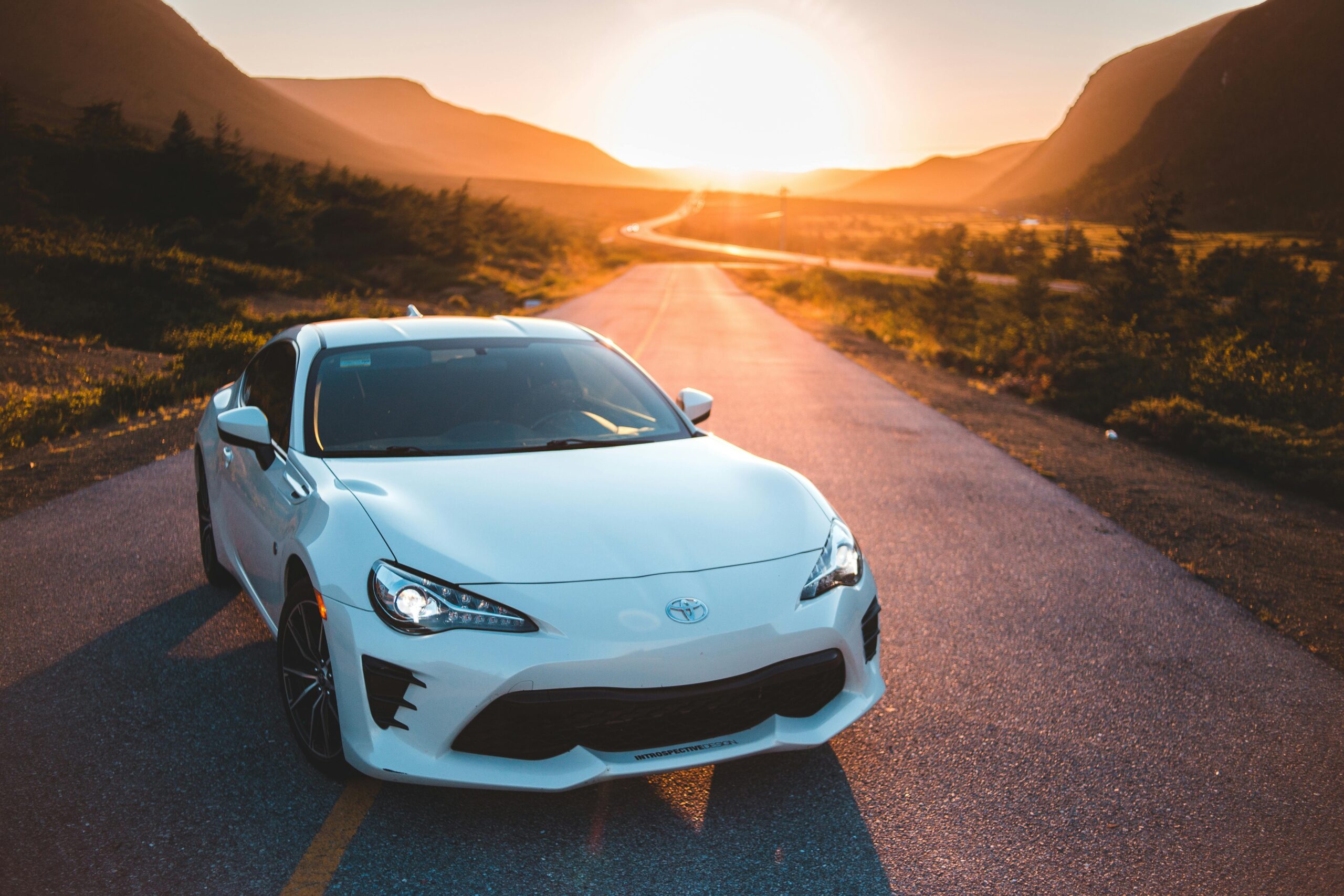
The $3,000 GR86 Budget Build Philosophy
Before spending a dollar, we set three rules for this GR86 budget build: Rule 1 — Function over form. Every modification had to change how the car drives, not just how it looks. Aesthetic modifications were permitted only if they came as a byproduct of a functional one. Rule 2 — Reversibility. Every modification had to be reversible. The GR86 is still under warranty and we wanted to keep it that way. No engine internals, no permanent chassis modifications. Rule 3 — Honest assessment. If a modification did not deliver a noticeable improvement, we would say so. Too much budget build content overstates gains to justify the spend. We are not doing that here. Total budget: $3,000. Here is where every dollar went.Modification 1: Tires — $780
Michelin Pilot Sport 4S — 215/45R17
The stock Michelin Primacy HP tires on the base GR86 are an embarrassment to the chassis underneath them. They are touring tires — quiet, comfortable, and completely unable to communicate what the suspension is doing. The first and most impactful modification on any GR86 is replacing them. We fitted Michelin Pilot Sport 4S in the standard 215/45R17 fitment. The transformation was immediate and significant. Turn-in sharpened dramatically. Mid-corner grip increased to the point where the balance of the car shifted — it is now possible to carry considerably more speed through a corner before the front washes wide. Braking distances shortened noticeably. Cost: $780 fitted Impact: 10/10 — the single best modification on this list Would we do it again: Immediately and without hesitation According to Car and Driver’s GR86 testing, tire choice has a more significant effect on this platform than on almost any comparable car, due to the GR86’s exceptional chassis sensitivity. Our experience confirms this entirely.Modification 2: Intake — $280
Injen SP Cold Air Intake
The GR86’s factory airbox is conservative. It does its job — it filters air and keeps the engine bay tidy — but it restricts airflow more than necessary and produces none of the intake sound that the 2.4-litre FA24 is capable of. The Injen SP intake is a short ram design that retains good cold air positioning while significantly opening up the intake path. Installation took 45 minutes with basic hand tools. The power gain is real but modest — approximately 8 horsepower at peak, with a more noticeable improvement in throttle response throughout the rev range. What you cannot measure is the sound improvement, which is dramatic. The FA24 now has a genuine intake bark under hard acceleration that makes every gear change more rewarding. Cost: $280 including fitting Impact: 6/10 for performance, 9/10 for experience Would we do it again: Yes — the sound alone justifies itModification 3: Sway Bar End Links — $160
Whiteline Adjustable End Links — Front and Rear
The factory end links on the GR86 use rubber bushings that introduce a small but perceptible amount of slop into the handling. Under hard cornering, this translates as a brief moment of vagueness before the car settles into its line. Whiteline’s adjustable end links replace the rubber bushings with spherical bearings — essentially eliminating the compliance from the connection between the sway bar and the suspension. The result is a more immediate response to steering input and a more consistent feel through sustained corners. This is one of the least glamorous modifications on this list and one of the most genuinely effective. Cost: $160 for front and rear sets Impact: 7/10 — subtle but consistently felt Would we do it again: Yes, as one of the first modificationsModification 4: Short Shifter — $220
Perrin Performance Short Shifter
The GR86’s six-speed manual is one of the best gearboxes fitted to any car at this price point. The throws are short, the action is mechanical and satisfying, and it rarely misses a gate. Starting from that baseline, a short shifter is not a rescue — it is a refinement. The Perrin unit reduces throw length by approximately 20% and tightens the gate feel without making the gearbox notchy or difficult in traffic. Every gear change becomes slightly more deliberate and satisfying. It is a modification you notice on every single drive. Cost: $220 fitted Impact: 7/10 Would we do it again: YesModification 5: Rear Sway Bar Upgrade — $340
Whiteline 18mm Adjustable Rear Sway Bar
The GR86’s factory rear sway bar is deliberately soft — Toyota tuned the car to understeer gently at the limit rather than oversteer, which makes it more forgiving for inexperienced drivers but less entertaining for experienced ones. Upgrading to Whiteline’s 18mm adjustable rear bar (from the factory 16mm unit) shifts the balance meaningfully toward neutral. Set on the softest adjustment, the car remains predictable and safe. Set on the stiffest, it rotates with noticeably more enthusiasm. We run it one click from stiff — a balance that rewards confidence without punishing mistakes. This modification requires no other suspension changes to work well. On the factory springs and dampers, it is the highest-impact handling modification available under $400. Cost: $340 fitted Impact: 9/10 — transformed the car’s balance Would we do it again: This was the highlight of the buildModification 6: Brake Pads — $190
EBC Yellowstuff Front Brake Pads
Stock brake pads on the GR86 are adequate for road use but begin to fade noticeably during sustained hard driving — track days, mountain passes, spirited back road sessions. For a car that invites this kind of driving, that is a genuine limitation. EBC Yellowstuff pads run cooler, bite harder from cold, and resist fade effectively at temperatures the factory pads struggle with. They produce more brake dust than the stock pads and have a slightly different cold feel that takes a drive or two to adapt to. For anyone planning any track use, this is a mandatory modification. For pure road use, it is beneficial but not essential. Cost: $190 front axle fitted Impact: 8/10 for spirited driving Would we do it again: Yes, particularly given the GR86’s track-day appealModification 7: Shift Knob — $95
Raceseng Ashiko Shift Knob
The factory shift knob on the GR86 is light and plasticky in a way that does not match the quality of the gearbox it sits on. The Raceseng Ashiko is a weighted aluminium unit that adds heft to each gear change — encouraging smoother, more deliberate shifts and eliminating the tendency to rush between gears. It sounds like a minor thing. It is not. The shift knob is the part of the car you interact with most frequently after the steering wheel. Getting it right matters. Cost: $95 Impact: 6/10 — disproportionately satisfying for the price Would we do it again: ImmediatelyModification 8: Short Antenna — $25
Stubby Antenna Replacement
The GR86’s factory whip antenna looks like it belongs on a 2003 economy car. A short stubby replacement takes five minutes and costs $25 and the result is a cleaner, more intentional look that suits the car’s lines considerably better. Cost: $25 Impact: Purely aesthetic but high satisfaction Would we do it again: Yes, day oneThe Full $3,000 Budget Build Breakdown
| Modification | Brand | Cost | Impact Score |
|---|---|---|---|
| Michelin Pilot Sport 4S tires | Michelin | $780 | 10/10 |
| Rear sway bar upgrade | Whiteline | $340 | 9/10 |
| Brake pads (front) | EBC Yellowstuff | $190 | 8/10 |
| Sway bar end links | Whiteline | $160 | 7/10 |
| Short shifter | Perrin Performance | $220 | 7/10 |
| Cold air intake | Injen SP | $280 | 6/10 |
| Shift knob | Raceseng | $95 | 6/10 |
| Short antenna | Various | $25 | — |
| Total | $2,090 |
What We Would Do With the Remaining $910
The obvious next step is coilovers — specifically the Tein Street Advance Z coilover kit at approximately $800, which would complete the suspension picture and allow proper corner weighting. This was excluded from the initial build to stay within the reversibility rule and because the factory dampers are genuinely good enough that coilovers are an enhancement rather than a rescue. The second priority would be a front strut tower brace to complement the sway bar work. At approximately $150 for a quality unit, the improvement in chassis rigidity under hard cornering is measurable.The Honest Verdict
The $3,000 GR86 budget build transformed a very good car into an excellent one. The tires and rear sway bar together account for most of that improvement — if budget was cut to $1,200, those would be the only two modifications worth making. The GR86 responds to modifications unusually well because the base car is fundamentally sorted. You are not compensating for factory compromises — you are building on a solid foundation. That makes every modification feel more effective than it would on a less capable platform. See our full guide to the best car mods under $500 for platform-agnostic modification recommendations, and our used sports car buying guide if you are still deciding on a platform to build.Frequently Asked Questions
What is the best first modification for a Toyota GR86?
Tires — without question. The factory Michelin Primacy HP touring tires are significantly below the capability of the GR86’s chassis. Fitting a performance tire like the Michelin Pilot Sport 4S or Continental ExtremeContact Sport transforms the car’s handling more than any other single modification at any price point. Do this before anything else.
Will modifying my GR86 void the warranty?
Under the Magnuson-Moss Warranty Act in the United States, a manufacturer cannot void your warranty simply because you added an aftermarket part — they must demonstrate that the specific aftermarket part caused the specific failure they are refusing to cover. All modifications in this build are bolt-on and reversible. However, engine internal modifications, ECU tunes, and modifications that significantly increase stress on drivetrain components carry more warranty risk. Consult your dealer if uncertain.
Is the GR86 good for track days?
The GR86 is an outstanding track day car, particularly at the beginner and intermediate level. Its balance, lightweight, and precise steering make it enormously educational — it communicates what it is doing in a way that faster, more electronically managed cars do not. The main limitations at stock specification are the tires and brake pad compound, both of which are addressed in this build. A GR86 with performance tires and upgraded brake pads is a very capable track day tool.
How much does a full GR86 build cost?
A meaningful street-focused build — tires, suspension upgrades, intake, brake pads, and interior modifications — can be accomplished for $2,000–$3,500 as demonstrated in this article. A track-focused build adding coilovers, a roll bar, harnesses, and a tune typically runs $6,000–$10,000. Full race preparation for time attack or club racing starts at approximately $15,000 above the car’s purchase price.
GR86 or BRZ — which is better to modify?
The GR86 and BRZ share the same platform, engine, and suspension geometry. Modification parts are almost universally interchangeable between the two. The choice between them is primarily aesthetic — the GR86 has a slightly sportier exterior design, while the BRZ has a more refined interior. Either is an equally capable modification platform, and the aftermarket support for both is extensive.